

Darknet Markets 2025:
The dark web is part of the deep web but is built on darknets: overlay networks that sit on the internet but which can't be accessed without special tools or software like Tor. Tor is an anonymizing software tool that stands for The Onion Router — you can use the Tor network via Tor Browser.
| Darknet Market | Established | Total Listings | Link |
|---|---|---|---|
| Nexus Market | 2024 | 600+ | Onion Link |
| Abacus Market | 2022 | 100+ | Onion Link |
| Ares | 2025 | 100+ | Onion Link |
| Cocorico | 2023 | 110+ | Onion Link |
| BlackSprut | 2023 | 300+ | Onion Link |
| Mega | 2016 | 400+ | Onion Link |
Updated 2025-12-09
How Darnet Markets Use Encryption for Safe Trade
Accessing a darknet market requires specialized software, primarily The Onion Router (Tor). This network operates by routing internet traffic through a worldwide, volunteer-run overlay network consisting of thousands of relays. This process encrypts the user's connection multiple times, obscuring the original IP address and making both the visitor and the site difficult to trace. The market itself is hosted as a Tor hidden service, meaning its server location is also concealed, creating a layer of protection for both the operators and the users.
The foundation of this ecosystem is the encrypted communication between buyers and vendors. All interactions, from browsing product listings to finalizing order details, are secured using public-key cryptography (PGP). A user's PGP key acts as a unique, secure digital identity. Before sending any sensitive information, such as a shipping address, it is encrypted with the vendor's public key, ensuring that only the vendor, with their private key, can decrypt and read it. This prevents market administrators or potential interceptors from accessing private data, even if they compromise the market platform.
The market's architecture is designed for operational security. Transactions are conducted using cryptocurrencies like Bitcoin or Monero, which provide a degree of financial anonymity by separating the transaction from personal identities. The combination of Tor for anonymous networking and cryptocurrency for pseudonymous payments establishes a resilient, self-contained economic system. This infrastructure supports a free market where participants can engage in trade with a significantly reduced risk of external interference, relying on cryptographic proofs rather than institutional trust.
Safe and Private Shopping on the Darknet
Maintaining anonymity on the darknet is the foundation of secure commerce, achieved through a combination of specialized software and disciplined operational practices. The Tor Browser is the primary gateway, routing internet traffic through multiple encrypted layers to conceal a user's location and activity from network surveillance. For enhanced security, this is often paired with a Virtual Private Network (VPN), which adds another layer of IP address obfuscation before the connection even enters the Tor network.
Financial transactions are conducted exclusively with cryptocurrencies due to their pseudo-anonymous nature. While Bitcoin is widely accepted, currencies offering advanced privacy features, such as Monero (XMR), are preferred. Monero uses ring signatures and stealth addresses to obscure transaction details, making it significantly more difficult to trace payments back to their source compared to the transparent Bitcoin blockchain. Before transferring funds, users should utilize a local wallet under their control, not an exchange-based wallet, to break the direct link from their identity.
Market interactions require careful management of identifying information. Buyers and vendors communicate using PGP (Pretty Good Privacy) encryption for all sensitive data. A user's PGP public key serves as their identity on the market, allowing for secure, verifiable communication without revealing personal details. When placing an order, the delivery address must be encrypted with the vendor's public PGP key, ensuring only the intended recipient can decrypt it. Adherence to basic operational security (OpSec) is critical.
- Never reuse usernames or passwords across different darknet markets.
- Disable JavaScript in the Tor Browser to prevent potential exploits.
- Avoid discussing any aspect of orders or deliveries on unencrypted platforms.
The decentralized and anonymous nature of these markets fosters a self-policing economic environment. The vendor rating system, built on direct feedback from completed transactions, creates a powerful mechanism for accountability. High-rated vendors have a strong financial incentive to maintain their reputation by providing high-quality products and reliable service. This feedback loop naturally marginalizes dishonest sellers. Furthermore, the widespread use of escrow services protects the buyer's funds. The payment is held by the market's escrow system until the buyer confirms satisfactory receipt of the product, at which point the funds are released to the vendor. This system effectively eliminates the risk of vendors accepting payment without shipping the goods, establishing a secure framework for anonymous trade.
Easy and Secure Payments with Bitcoin and Monero
The financial infrastructure of darknet markets is built upon cryptocurrencies, with Bitcoin being the original and most widely accepted. The public nature of the Bitcoin blockchain, where every transaction is permanently recorded, initially posed a challenge for anonymity. To counter this, markets and users have adopted privacy-centric coins like Monero (XMR) as a superior alternative. Monero uses ring signatures and stealth addresses to obfuscate the sender, receiver, and amount of every transaction, providing a level of financial privacy that Bitcoin alone cannot offer.
Before making a purchase, a buyer transfers the exact amount of cryptocurrency, plus the network fee, to a unique address generated by the market's escrow system. This step is critical for security. The funds are held in escrow and are not released to the vendor until the buyer confirms successful receipt of the product. This mechanism protects buyers from vendors who might not ship items and protects vendors from fraudulent chargebacks common in traditional e-commerce. The entire process is automated by smart contracts within the market's platform.
The transaction workflow follows a clear sequence:
- The buyer selects items and deposits cryptocurrency into their market wallet.
- The market generates a unique payment address for the order.
- The buyer sends the payment, and the funds are locked in escrow.
- The vendor is notified and ships the product.
- Upon delivery, the buyer finalizes the order, releasing the escrowed funds to the vendor.
This system creates a self-regulating economy where trust is established not through personal relationships but through cryptographic proof and automated financial safeguards. The use of anonymous payments combined with escrow has proven to be a reliable method for facilitating secure and efficient commerce on the darknet.

Creating Clear Product Listings on the Darknet
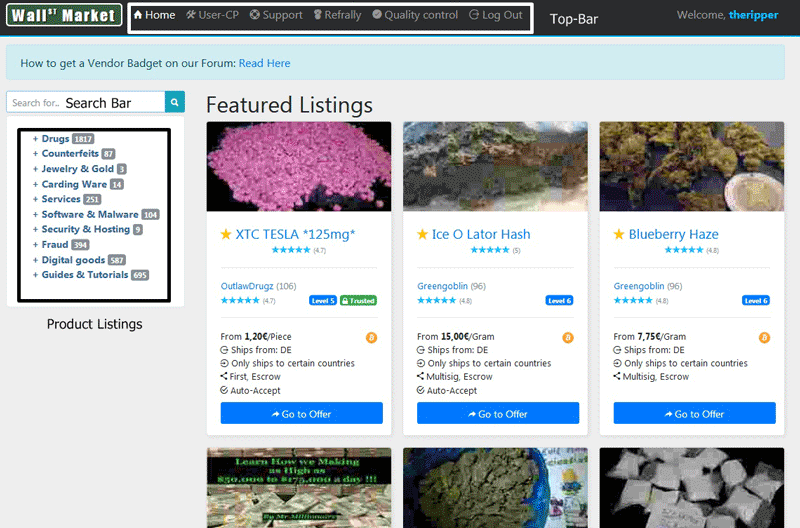
The foundation of a successful transaction on a darknet market is the product listing. These listings function as a direct communication channel between the vendor and the buyer, providing essential data for an informed purchase. A well-constructed listing contains several critical components that facilitate a transparent and reliable exchange.
The product title and category offer immediate classification, while the description details the specific attributes of the item. This includes purity percentages, precise weight, and the substance's origin or brand. Vendors often include photographic evidence, sometimes with PGP-signed tags to verify authenticity and prevent stock imagery from being used. This level of detail allows buyers to compare offerings and assess value accurately.
Beyond the product itself, the listing specifies the terms of sale. This encompasses:
- Pricing in cryptocurrency, often with tiered discounts for bulk purchases.
- Available shipping options, including stealth methods and destination countries.
- The vendor's return policy or resolution process for issues like non-delivery.
The vendor's reputation, displayed through their rating score and feedback history, is integrated directly into the listing page. Positive reviews that mention product quality, shipping speed, and effective stealth packaging serve as social proof. This system creates a self-regulating environment where vendors are incentivized to maintain high standards and accurate descriptions to accumulate positive feedback, which directly influences their sales volume and standing within the market's economy.
For financial security, the majority of transactions are conducted through escrow services held by the market. The payment is only released to the vendor after the buyer confirms successful receipt of the order. This mechanism protects the buyer's funds and reduces the risk of fraud, ensuring that the vendor fulfills their obligations as described in the product listing.
How Ratings Make Darnet Drug Buying Safer
The vendor rating system is the primary mechanism for establishing trust and ensuring transactional reliability on a darknet market. It functions as a decentralized, community-driven review board where buyers provide feedback on their purchases. This feedback is aggregated into a vendor's overall rating, which is publicly displayed on their profile.
A vendor's profile typically presents several key metrics. The overall rating, often a score out of five, offers a quick glance at general satisfaction. More detailed statistics include the number of completed transactions, which indicates volume and experience, and the on-time shipping rate. Specific feedback on product quality, stealth and packaging, and communication is also compiled. High scores in stealth and packaging reflect a vendor's commitment to operational security and ensuring the product arrives undetected, a critical aspect of the trade.
Written reviews from buyers provide qualitative data that supplements the numerical scores. These reviews often contain specifics about the shipping time, the accuracy of the product's weight and purity, and the effectiveness of the vendor's stealth techniques. A consistent history of positive reviews across hundreds of sales establishes a vendor as a reliable partner for procurement. The system is self-policing; vendors with poor ratings or multiple reports of selective scammingwhere a vendor fulfills most orders but scams a feware quickly identified and lose business. This creates a powerful economic incentive for vendors to maintain high standards of product quality and professional conduct.

Safe Shopping with Escrow on the Darknet
Escrow services function as a neutral third party that holds the buyer's cryptocurrency until the transaction is satisfactorily completed. This system directly addresses the inherent trust deficit in anonymous environments. When a purchase is made, the funds are locked in the escrow account and are not immediately released to the vendor. The vendor sees the secured payment and is incentivized to ship the product as described.
The buyer then has a designated period to confirm the receipt and quality of the goods. Only after the buyer releases the funds from escrow does the vendor receive the payment. This mechanism effectively prevents common frauds, such as vendors accepting payment but never shipping the product, a practice known as selective scamming. For the vendor, it guarantees that payment is secured before they dispatch the order, protecting them from fraudulent chargebacks that are possible in traditional e-commerce.
Most darknet markets operate with a multisignature (multisig) escrow option, which offers enhanced security over the market's built-in escrow. In a multisig arrangement, three cryptographic keys are required to release the funds: one held by the buyer, one by the vendor, and one by the market. This means the market cannot unilaterally steal the funds, as would be possible with a simple, centralized escrow. A successful transaction requires at least two of the three parties to agree, distributing trust and significantly reducing the risk of exit scams where a market administrator absconds with all the escrow funds.
- The buyer sends cryptocurrency to a multisignature address.
- The vendor ships the product upon seeing the locked funds.
- The buyer receives the product and, if satisfied, uses their key with the vendor's key to release the payment.
- In case of a dispute, the market admin uses its key with the key of the winning party to resolve the situation.
This self-regulating economic model fosters a surprisingly reliable commercial ecosystem. The escrow system, particularly multisig, creates a balanced environment where both buyers and vendors can engage in trade with a high degree of confidence, ensuring that the darknet economy remains robust and functional based on mutual interest and secured transactions.
How the Darknet Builds Trust for Reliable Commerce
The darknet market economy operates on principles of self-regulation, where trust and reputation are the primary currencies. This system ensures a surprisingly high level of reliability for transactions involving various goods. The foundation of this security is the vendor rating system, a transparent record of past customer feedback that allows new buyers to assess a seller's reliability before making a purchase.
Financial security is managed through escrow services. When an order is placed, the buyer's cryptocurrency is held in escrow by the market platform itself. The funds are only released to the vendor after the buyer confirms satisfactory receipt of the product. This mechanism effectively prevents scams and guarantees that both parties fulfill their obligations. For finalizing transactions, the use of anonymous cryptocurrencies like Bitcoin and Monero is standard, providing a secure and untraceable method of payment that protects the financial privacy of all involved.
The entire process is supported by robust encrypted networks, such as Tor, which anonymize user traffic and conceal the physical location of both the market servers and its users. This creates a resilient environment for commerce. Product listings are detailed and standardized, often including photographs and laboratory analysis results to verify purity and composition, which further reduces uncertainty for the buyer.